1980
the first star
back in old unix your password hash just sat in /etc/passwd, right next to your username. in a file everyone could read.
in 1980 bill joy put a * there for an account called daemon. nobody's supposed to ever log in as it.
a * isn't a hash, so no password can match it. unix still does this today

the next field is the real name. he wrote "the devil himself"
1990s
how sshd checks your password
ok so these days the hash lives in /etc/shadow and looks like $6$abc$k2P9…. the $6$ means sha512, abc is the salt, the rest is the actual hash
you type your password, sshd hashes it with that same salt and checks if it comes out identical. same = you're in. that's it
and if the field is just *? there's nothing to match. type whatever you want, it's never getting you in
1990s
the fine print
one more rule. if crypt() can't do its job, it returns NULL. like if the salt asks for some algorithm the system doesn't have, there's nothing to compute, so you get NULL instead of a hash
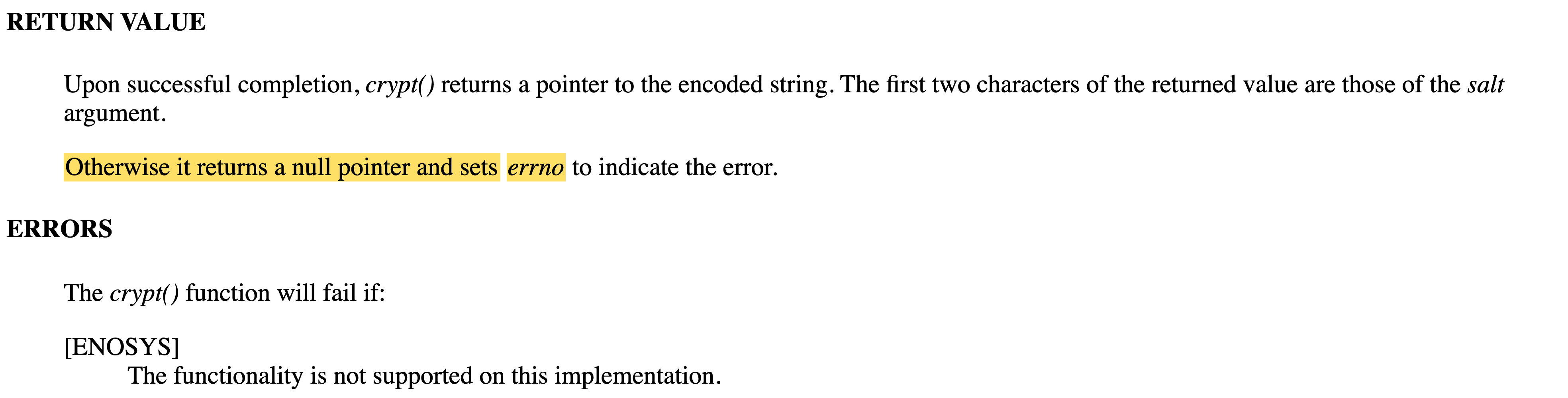
pretty clear.
except a lot of programs never check for NULL. they just compare whatever crypt() gives back with the stored field, hit the NULL, and crash
2012
crypt stops saying NULL
so musl (the libc under alpine) goes ok fine, crypt() just won't return NULL anymore. if it fails, it returns a single character instead. that character can never match a real password, so programs don't crash, they just see a wrong password
now guess which character they picked for that
yep. the star. again.
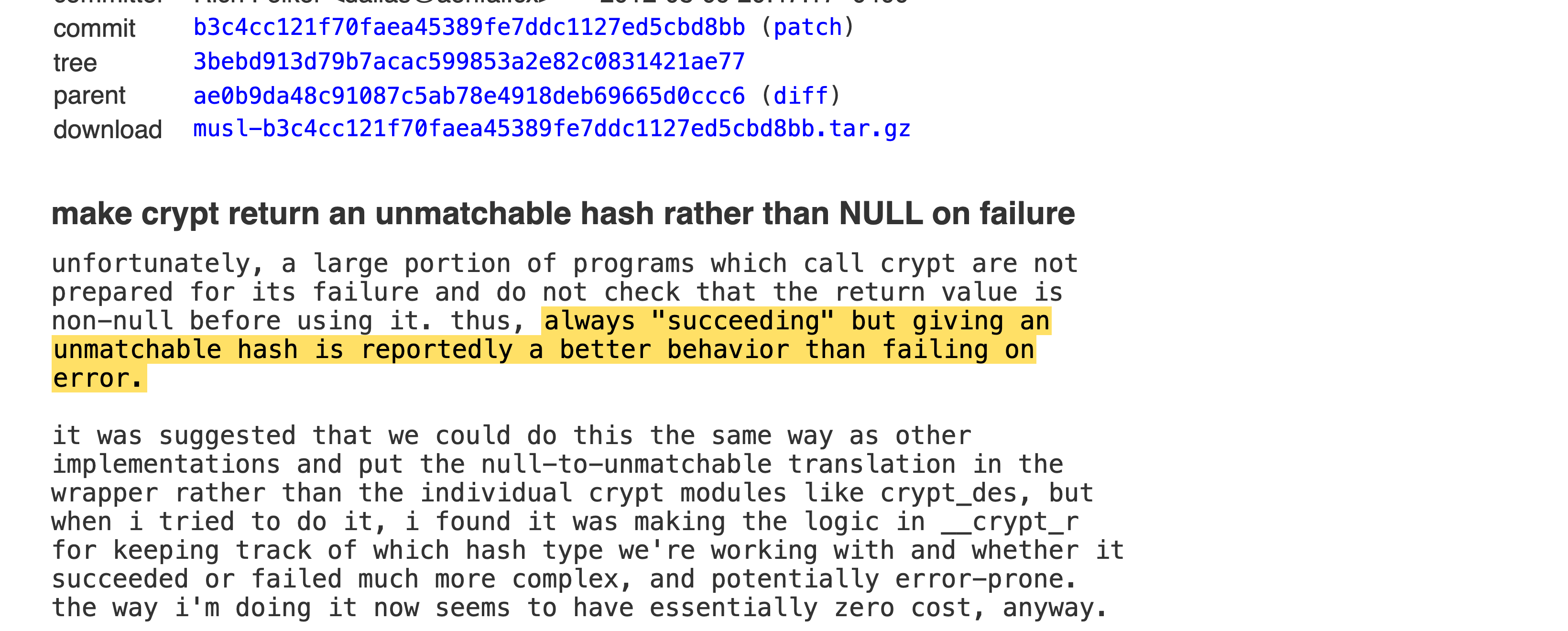
"reportedly."
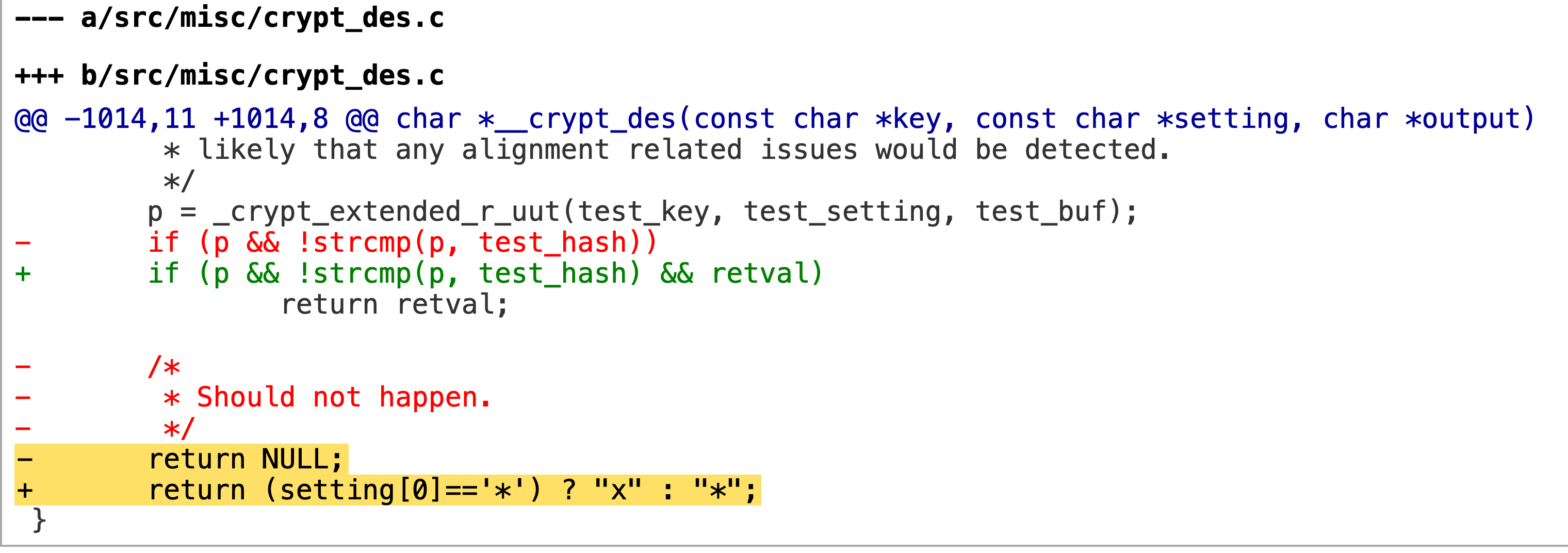
"should not happen" gone, NULL gone, "*" in
2012
three weeks later
then musl adds sha512 crypt. the thing is, sha512crypt gets slower the longer the password is, so someone could send one giant password and keep your server busy for a long time. so musl just caps it at 256 bytes and refuses anything longer
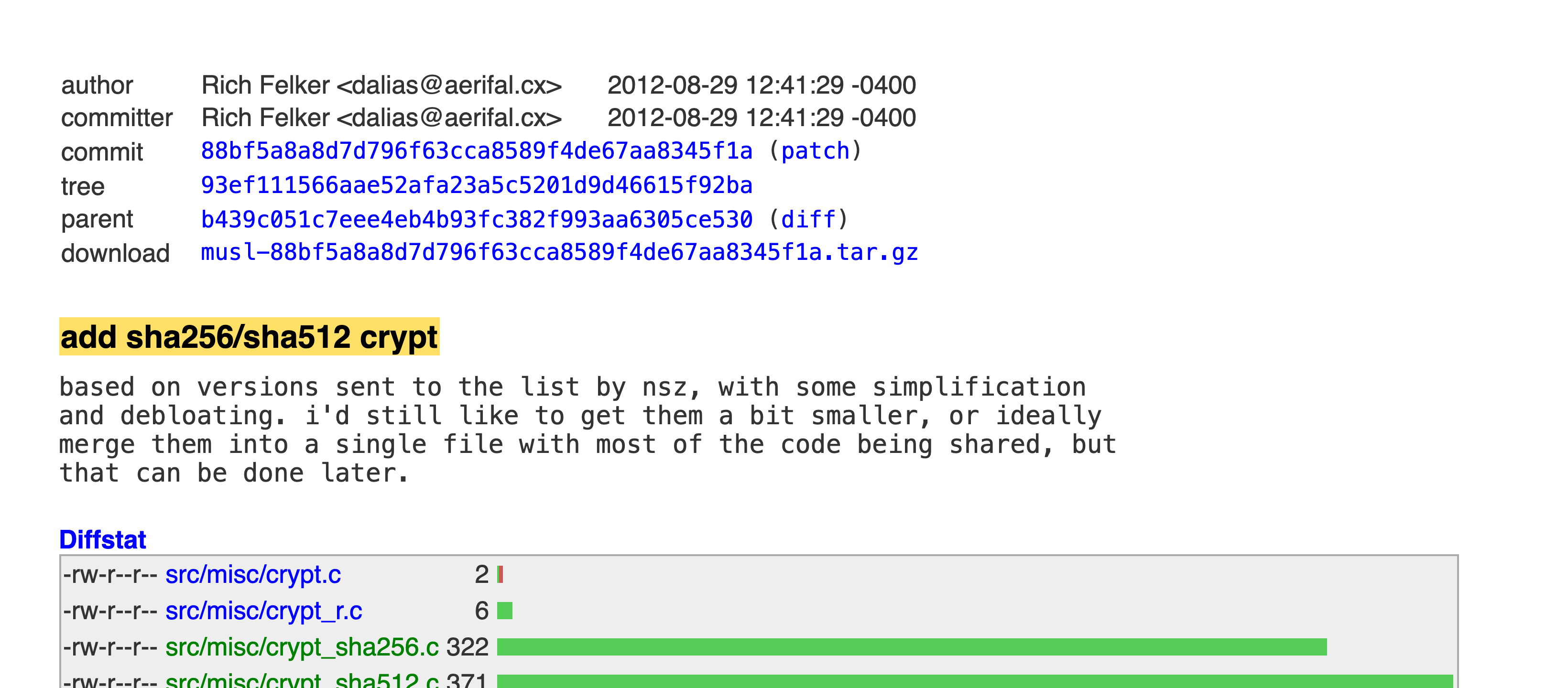
twenty days after the "*" commit btw
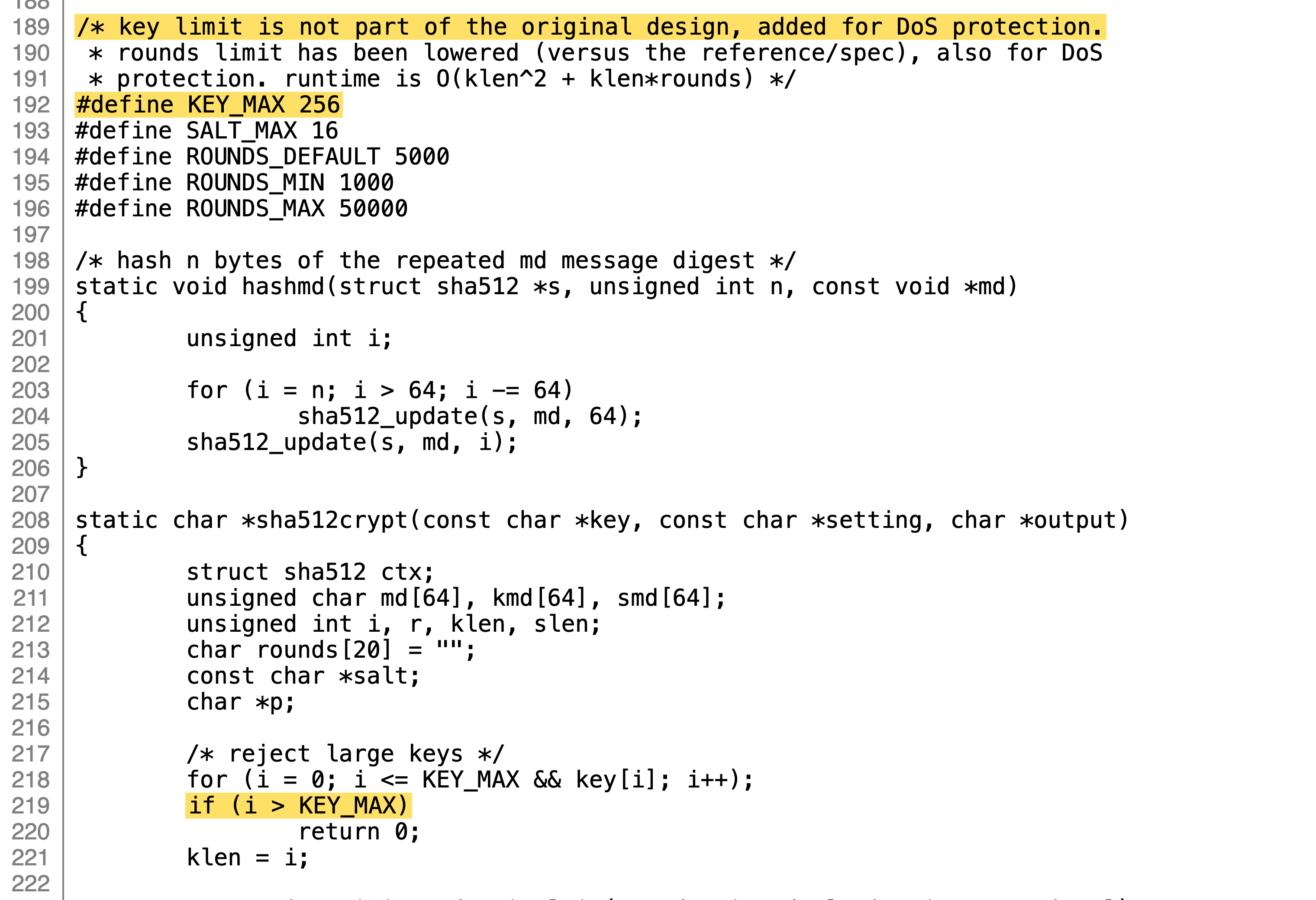
so past 256 bytes crypt fails. and when crypt fails… it says "*".
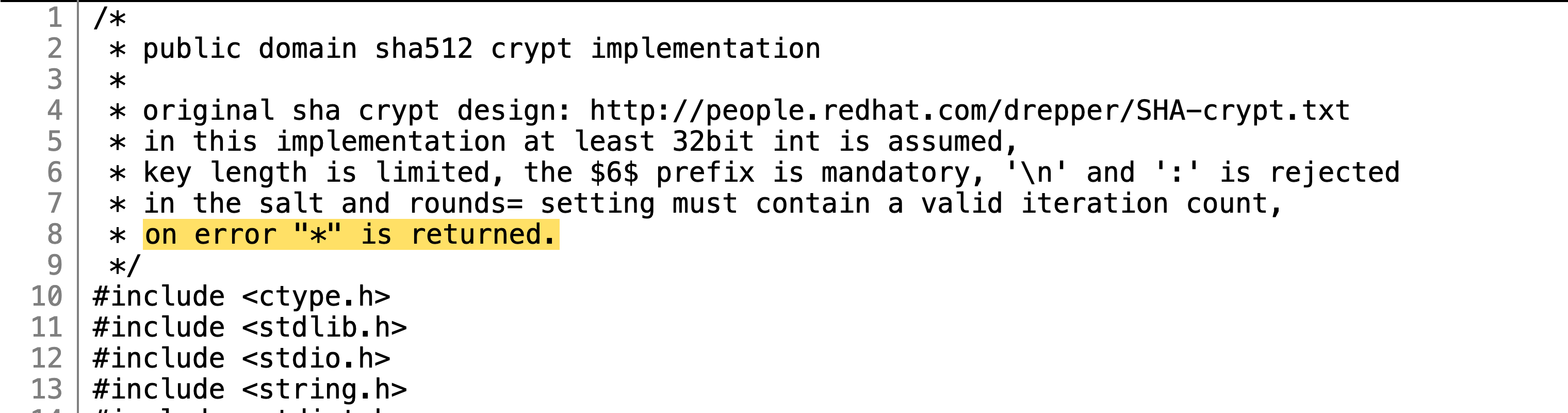
literally in the comment the whole time
2016
sshd borrows bob's salt
CVE-2016-6210. ask sshd about a user that doesn't exist and it says no instantly, cause there's nothing to hash. real users take a few ms longer. so just time it and you know who exists
the fix is kinda funny. no real hash to check? sshd grabs some other account's salt and hashes your password anyway, just to waste the same amount of time. still a no, just a slower no
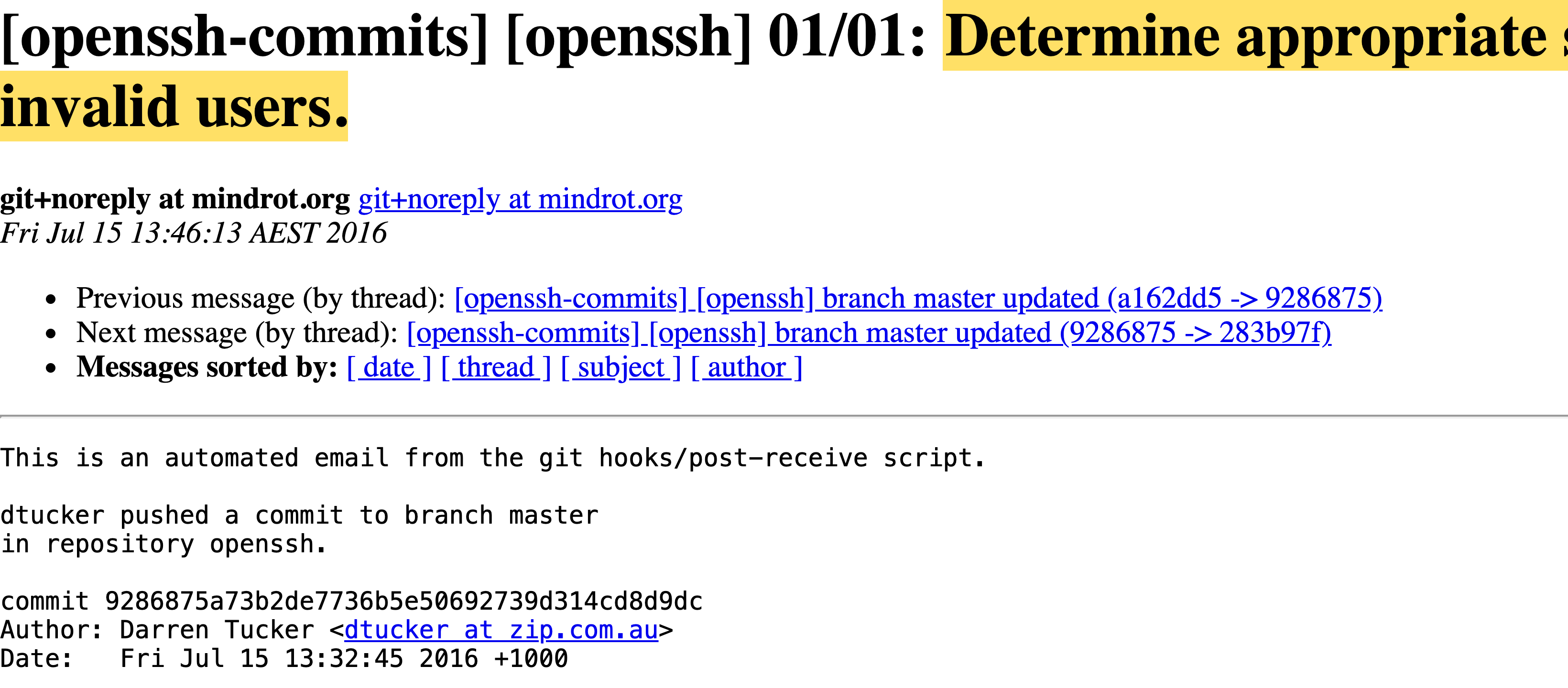
"for invalid users." and also, it turns out, real users with a *.
2019 → 2022
the fix for the fix
2019. turns out alpine's docker images had no root password. at all. CVE-2019-5021. alpine fixes it by locking root with !
but without pam, ! also kills ssh keys. and cloud images log in with keys.
2022. alpine 3.16 switches root to *. still locked, keys work again
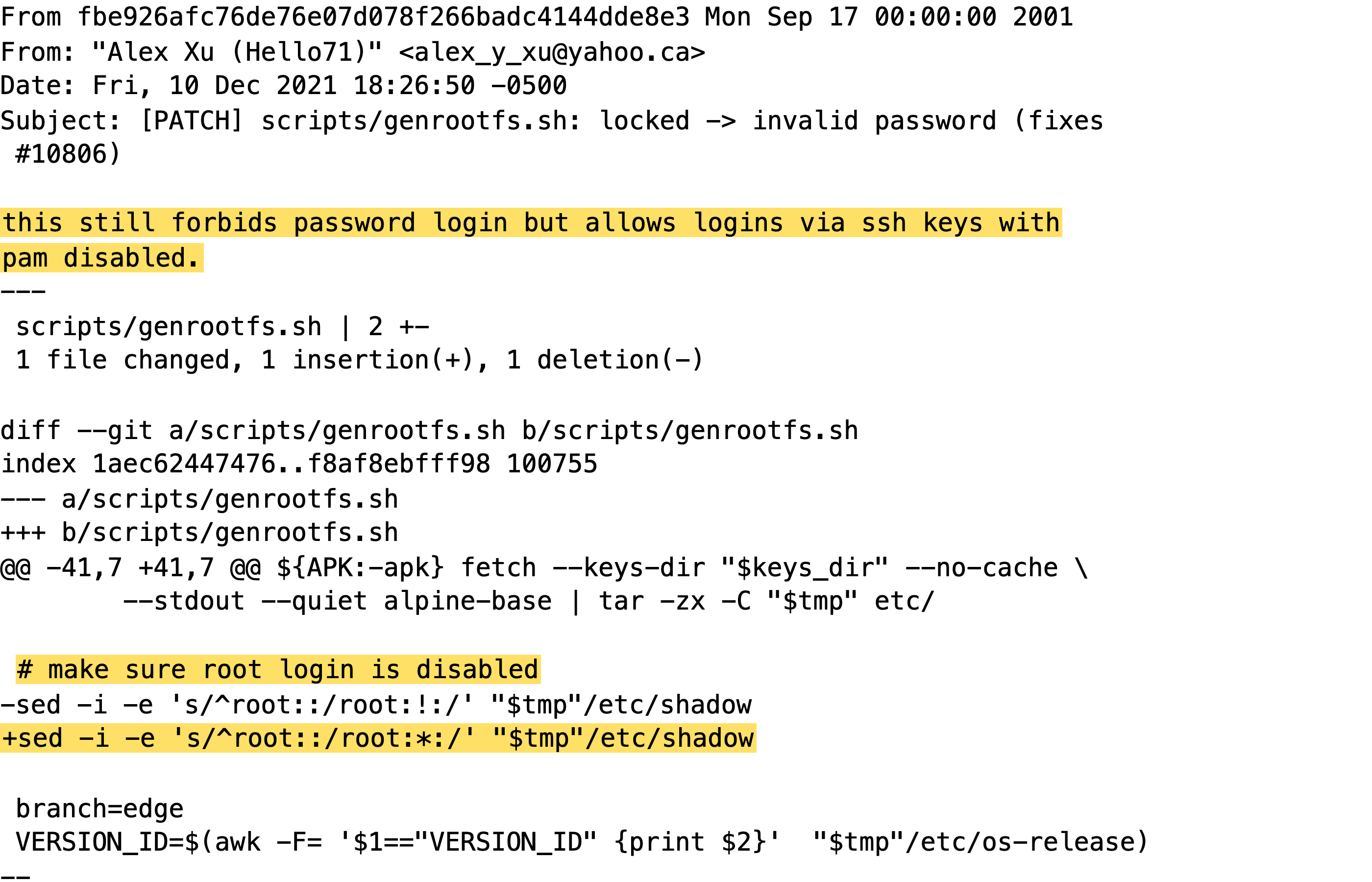
narrator: it did not.
2016 → 2026
ten quiet years
why did nobody notice? well, maybe someone did. maybe someone pasted the wrong thing into a password prompt, half a slack message or a whole ssh key, and it just let them in. you've never pasted the wrong thing into a password prompt?? amazing. a fresh box with no passwords set isn't affected. a * in shadow needs a wrong try first. openssh tests on openbsd and glibc, musl doesn't test sshd, and most distros go through pam, which never even calls crypt for a *.
so as far as anyone knows, nobody noticed. as far as anyone knows.
some people got really close though
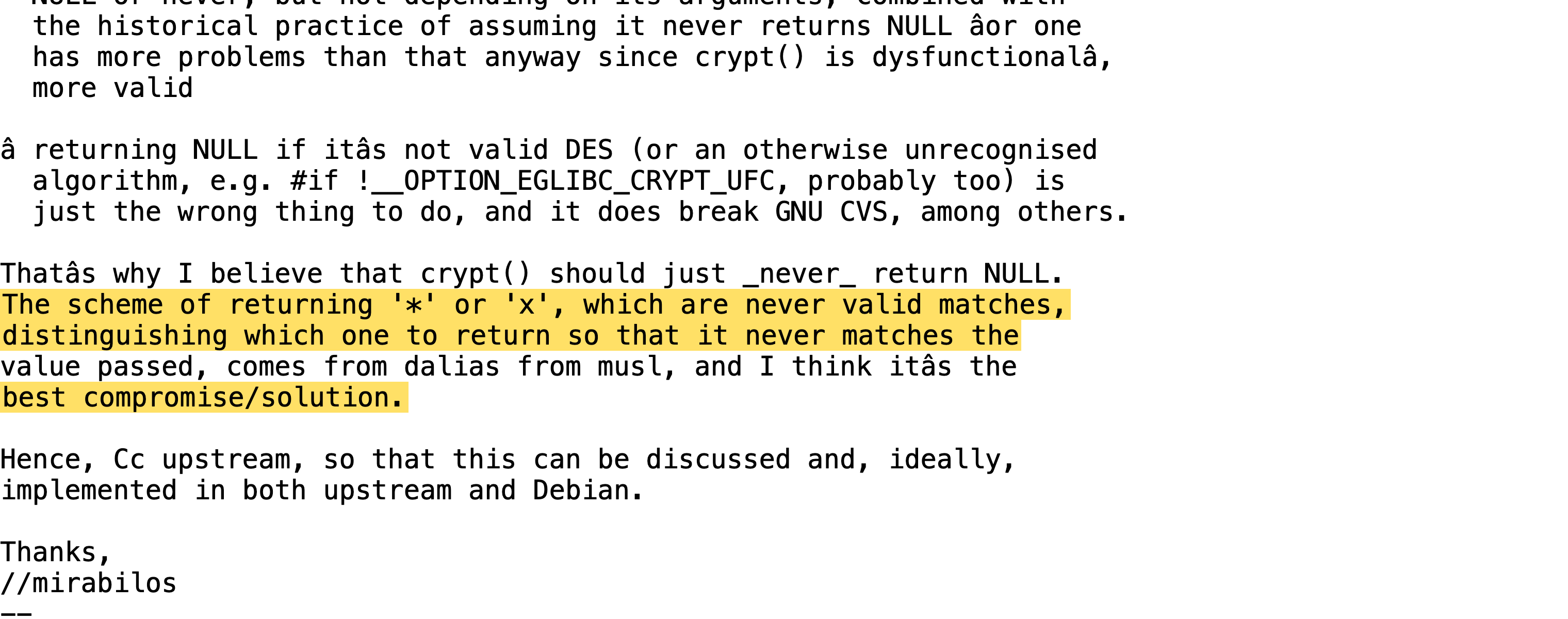
a debian dev asks glibc to copy musl's "*". six years later debian moves to libxcrypt, which says "*0", and closes the bug. one character away.
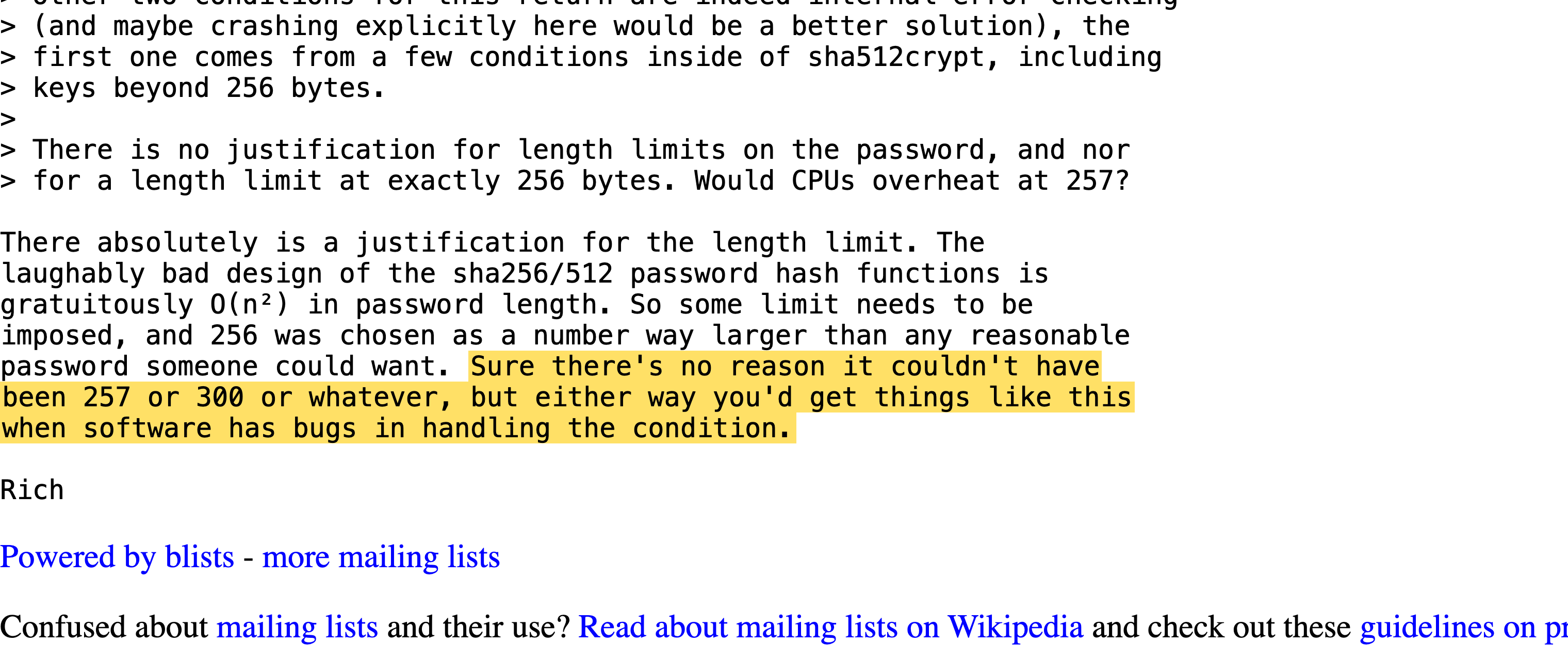
this thread is about busybox passwd breaking on a 257 character password. same "*", same limit. nobody says "sshd"
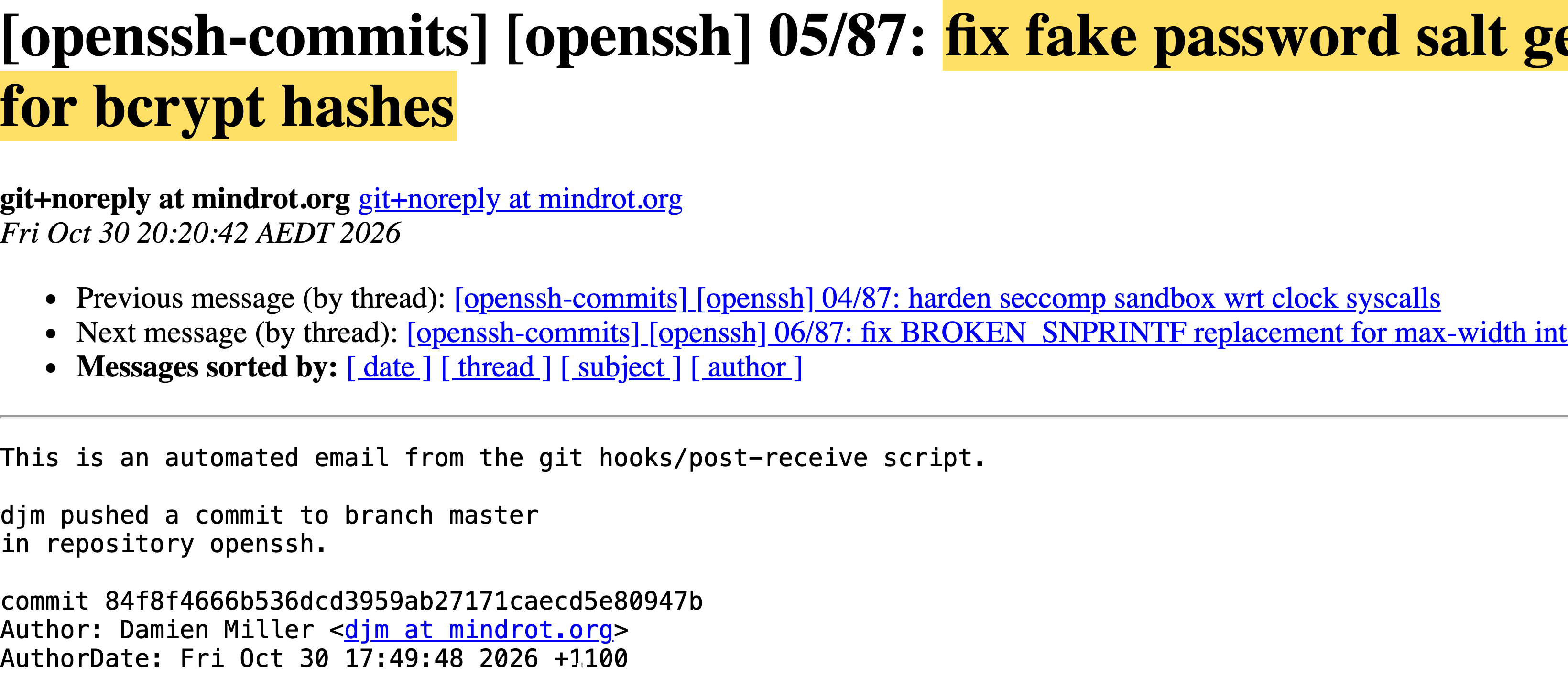
a security review fixes pick_salt(). the bug is four lines below it. four days before i found it.
nov 2026
how i ran into it
i was messing around with openssh, mostly the boring parts where it talks to libc, like the password code. people don't really look at that stuff, they look at the crypto. so i built sshd every way i could think of (glibc, musl, pam, no pam, shadow, no shadow) and threw like 17,600 weird logins at it. weird hashes, broken accounts, passwords way too long
oh did i say "i"? sorry. i had agent swarms. a lot of them. let's not get into it
every build agreed on every login. except musl without pam. that one said yes to things it shouldn't